
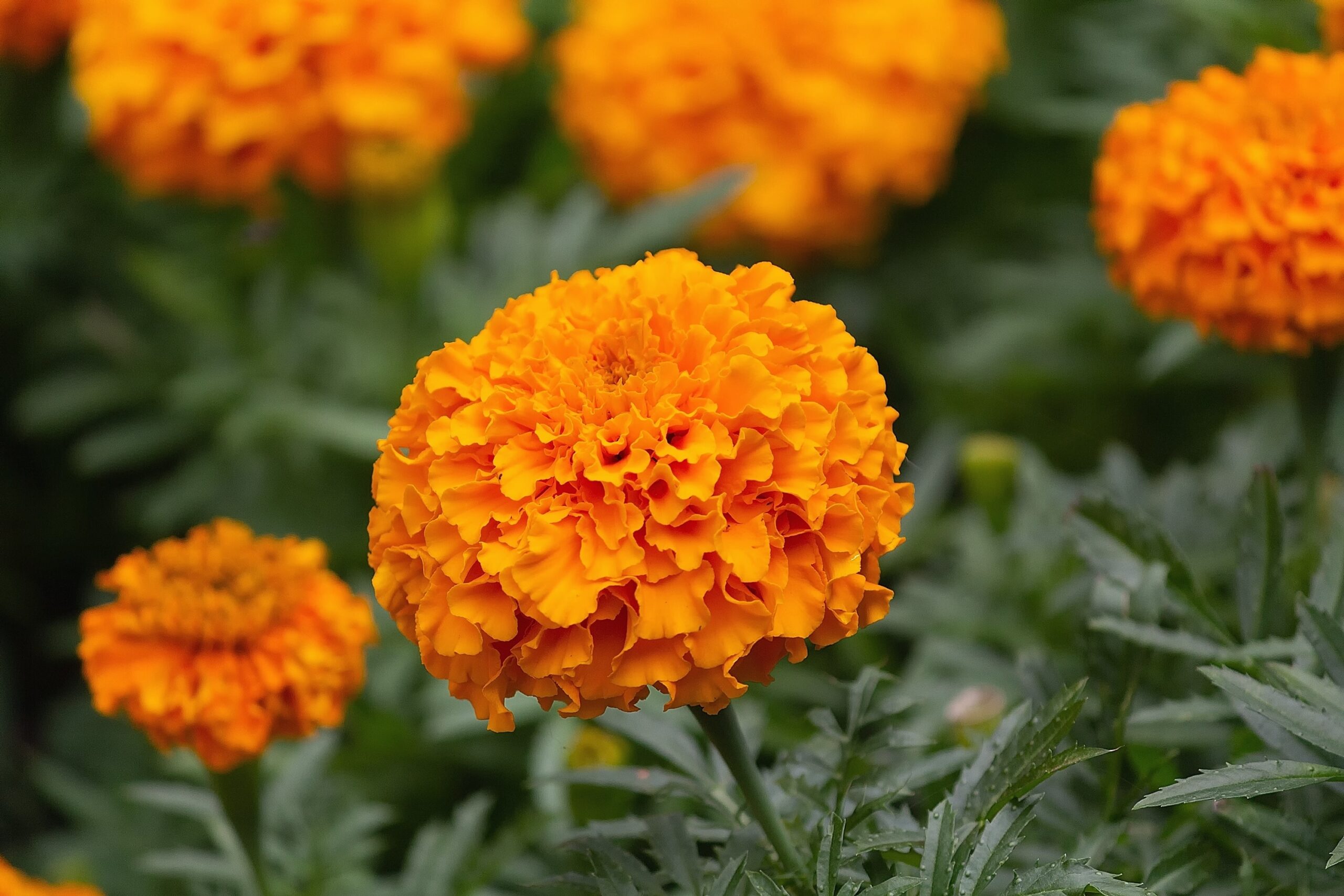
The marigold flower, commonly known as Genda in South Asia, is one of the most culturally powerful and widely cultivated flowers in the world, especially in countries like India, Pakistan, Mexico, and parts of Africa, where it is deeply integrated into religious ceremonies, festivals, and daily life, and unlike delicate ornamental flowers that require high maintenance, marigold is a highly resilient plant that thrives in harsh sunlight, poor soil conditions, and varying climates, making it one of the most accessible and economically important flowers in global horticulture.
🌿 Botanical Structure and Biological Strength of Marigold
Marigold belongs to the genus Tagetes, and it is a fast-growing annual flowering plant that produces bright yellow, orange, and golden blooms, and what makes its biological structure particularly interesting is its strong stem system, deeply branched foliage, and highly efficient flower production mechanism, where each plant can produce multiple flower heads throughout its lifecycle, and its leaves contain natural aromatic oils that help protect it from insects and pests, making marigold naturally resistant and low-maintenance compared to many other ornamental flowers, which is why it is widely used in large-scale farming and decorative landscaping.
🌸 Why Marigold Has Such Bright Colors
The vibrant yellow and orange colors of marigold are produced by high concentrations of carotenoid pigments, which are natural plant compounds also found in carrots and pumpkins, and these pigments not only give marigold its bright appearance but also play a role in protecting the plant from intense sunlight and UV radiation, while also making it highly visible to pollinators such as bees and butterflies, and this strong color visibility is one of the reasons marigold is so successful in attracting insects and ensuring efficient pollination in natural environments.
🌱 Life Cycle and Growth Pattern of Marigold Plant
The life cycle of marigold begins with seed germination, which occurs quickly under warm soil conditions, and after germination the plant develops a strong root system followed by rapid vegetative growth where leaves and stems expand quickly, and within a short period the plant enters its flowering stage where multiple flower buds begin to form and bloom continuously, and unlike seasonal flowers that bloom once, marigold produces flowers repeatedly throughout its growing season, making it one of the most productive ornamental plants in terms of flower yield and visual impact.
🧠 Psychological and Emotional Impact of Marigold
Marigold flowers have a strong psychological association with positivity, celebration, energy, and warmth due to their bright golden colors, and in color psychology, yellow and orange tones are linked with happiness, creativity, and emotional stimulation, which is why marigold is often used in festivals, weddings, and celebrations to create a lively and energetic atmosphere, and in many cultures it is also associated with protection and spiritual positivity, where it is believed to attract good energy and remove negative influences from the environment.
🌍 Cultural and Religious Importance of Marigold
Marigold holds deep cultural significance in many parts of the world, especially in South Asian and Latin American traditions, where it is used in religious ceremonies, temple offerings, weddings, and festivals such as Diwali and Day of the Dead, and in Hindu culture marigold is considered a sacred flower used in garlands and decorations for deities, while in Mexican traditions it is associated with remembrance and honoring ancestors, showing that marigold is not just a decorative plant but a deeply symbolic flower that connects human emotions, spirituality, and cultural identity.
🧪 Medicinal and Practical Uses of Marigold
Marigold has been used in traditional medicine for centuries due to its anti-inflammatory, antibacterial, and healing properties, and extracts from the flower are often used in skin creams, ointments, and herbal remedies to treat minor wounds, rashes, and skin irritations, while marigold tea is also consumed in some cultures for its potential digestive and calming effects, and beyond medicine, marigold is used in natural pest control because its scent helps repel harmful insects, making it useful in organic farming systems.
🐝 Ecological Role of Marigold in Nature
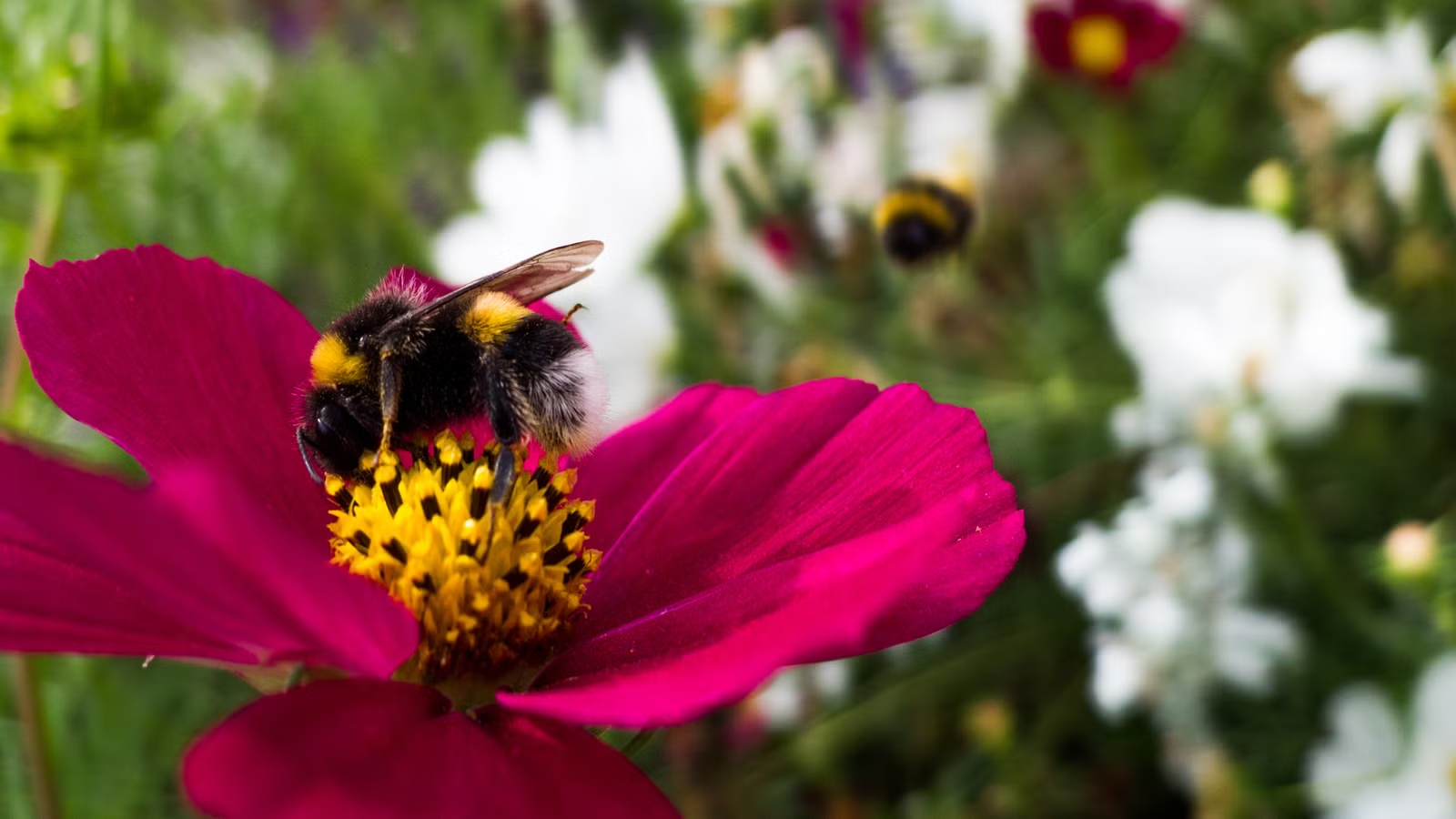
Marigold plays an important ecological role by attracting beneficial insects such as bees, butterflies, and ladybugs, which help in pollination and pest control, and because it is a companion plant in agriculture, marigold is often grown alongside vegetables and crops to naturally reduce pest populations without chemical pesticides, making it an environmentally friendly plant that supports biodiversity and sustainable farming practices.
🌸 Conclusion
The marigold flower is a perfect example of how nature combines beauty, strength, and functionality into a single plant, because it is not only visually striking but also biologically resilient, culturally significant, and ecologically useful, and its ability to thrive in difficult conditions while supporting human traditions, agriculture, and biodiversity makes it one of the most valuable and widely respected flowers in the world.
❓ FAQ
1. Why is marigold so popular?
Because it is bright, easy to grow, and culturally significant.
2. What do marigolds symbolize?
They symbolize positivity, energy, and spiritual protection.
3. Is marigold a medicinal plant?
Yes, it is used in traditional medicine and skincare products.
4. Can marigold grow in poor soil?
Yes, it is highly adaptable and grows in many soil types.
5. Why is marigold used in festivals?
Because it represents celebration, purity, and positive energy.

Leave a Reply