
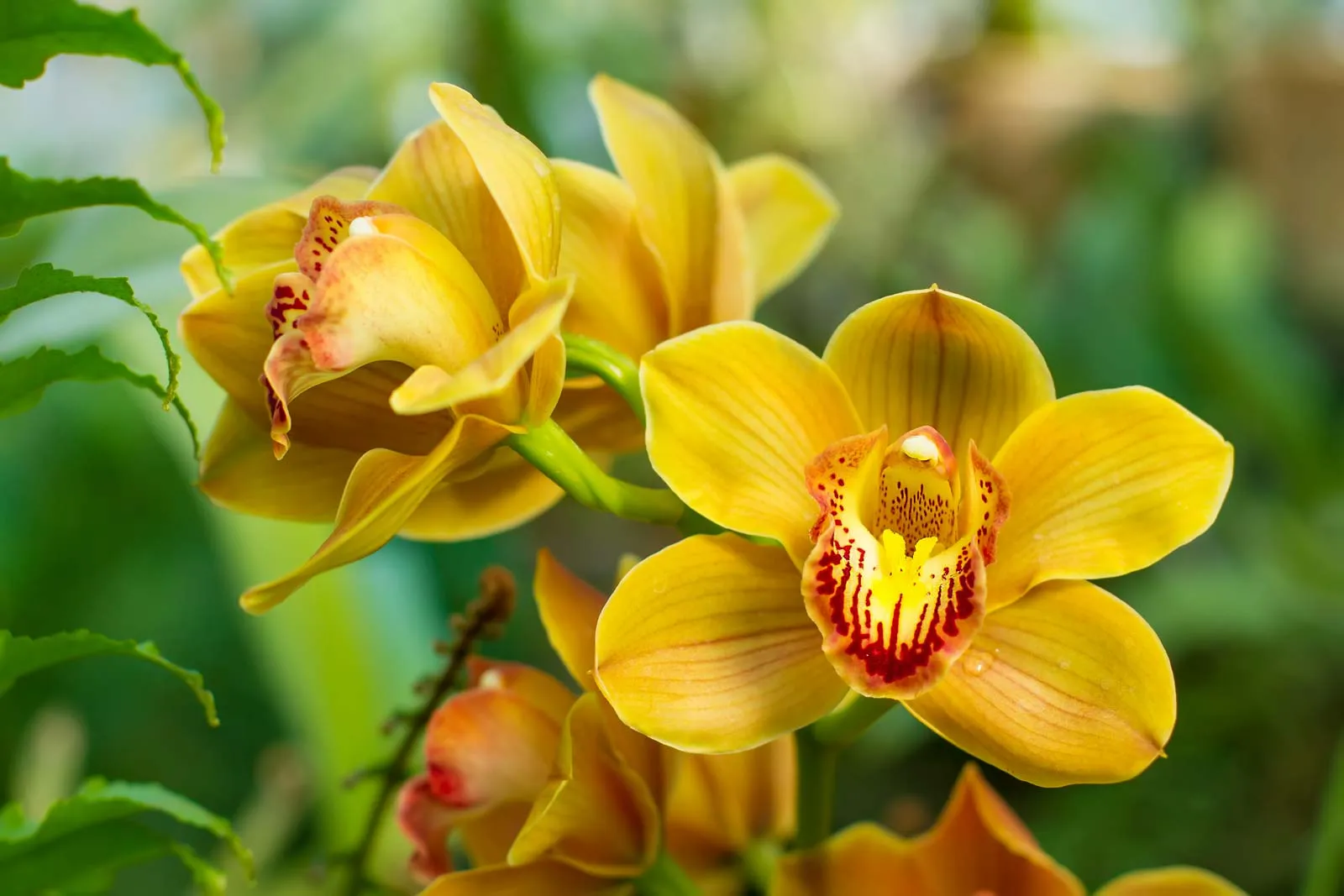
The orchid is one of the most diverse, complex, and evolutionarily advanced flowering plant families on Earth, with over 25,000 natural species and more than 100,000 hybrid varieties, making it one of the largest plant families in existence, and what makes orchids especially fascinating is not just their beauty but their extreme biological specialization, where many species have evolved unique shapes, colors, and pollination strategies that allow them to survive in highly specific environments, and because of this extreme adaptation, orchids are often considered symbols of luxury, rarity, intelligence in nature, and evolutionary perfection.
🌿 Botanical Structure and Evolutionary Design of Orchid
Orchids belong to the family Orchidaceae, and unlike many common flowers that follow simple structural patterns, orchids have highly specialized and asymmetric floral designs, where the petals are arranged in a unique formation that includes a modified petal called the “labellum” or lip, which acts as a landing platform for pollinators, and what makes orchid biology particularly advanced is that many species do not rely on general pollination methods but instead have evolved extremely specific relationships with certain insects or birds, meaning that some orchids can only be pollinated by one specific species, showing an extraordinary level of biological precision and evolutionary co-dependence between plant and animal life.
🌸 Why Orchids Are So Diverse and Rare in Nature
The extreme diversity of orchids is a result of millions of years of adaptive evolution, where different orchid species have evolved to survive in very specific microclimates such as tropical rainforests, mountain regions, and even semi-arid environments, and this specialization has led to unique flower shapes, colors, scents, and even mimicry techniques, where some orchids imitate the appearance or scent of insects, fungi, or even other flowers to attract pollinators or deceive them into carrying out pollination, making orchids one of the most intelligent examples of evolutionary strategy in the plant kingdom, where survival is achieved not through strength but through precise adaptation and ecological manipulation.
🧬 Orchid Pollination System: One of the Most Complex in Nature
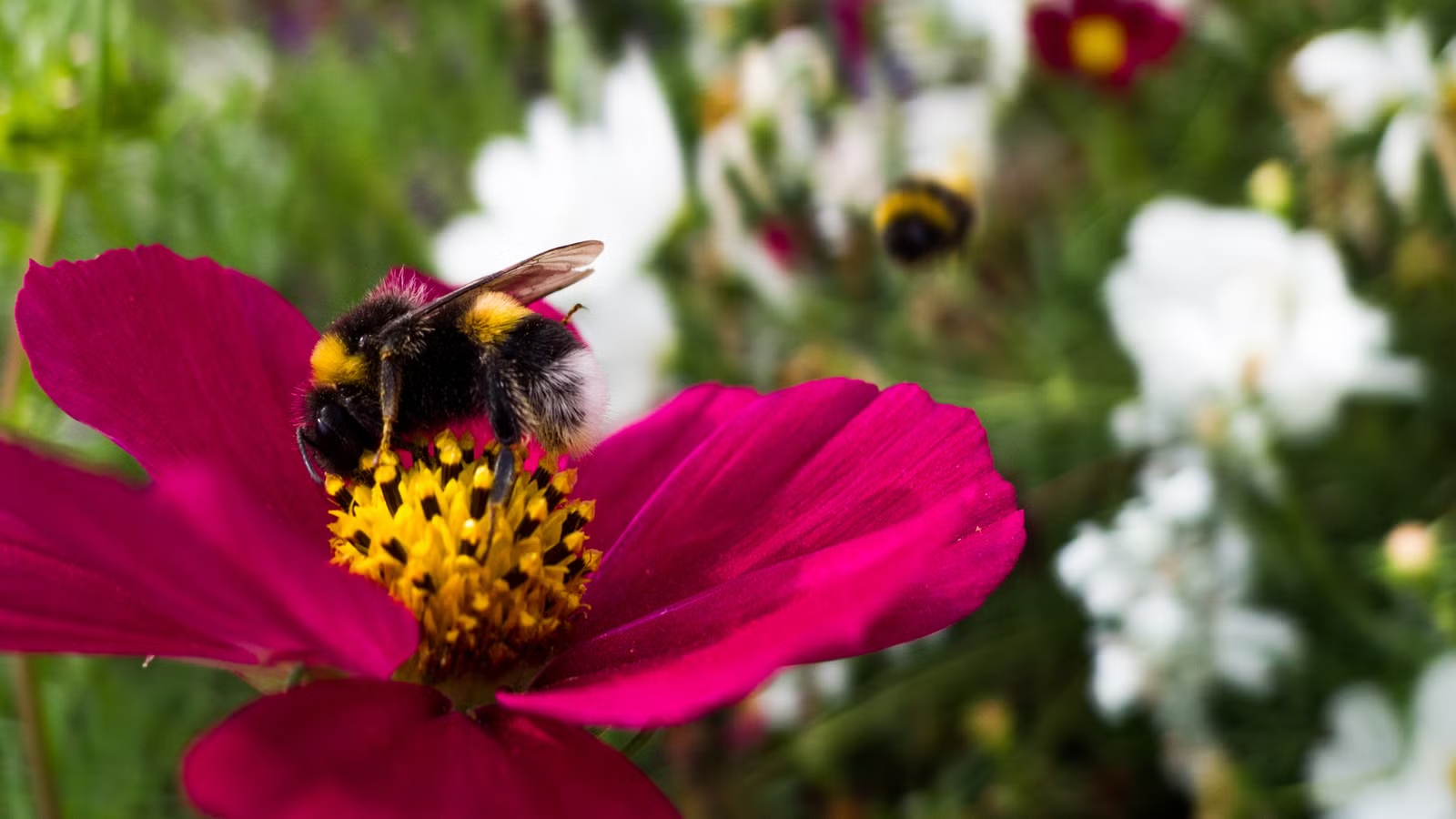
Orchid pollination is one of the most advanced biological systems in the plant world, where instead of simply producing nectar and attracting general insects, many orchids use highly specialized mechanisms such as visual mimicry, scent production, and structural traps to ensure pollination, and in some rare cases, orchids mimic the appearance of female insects to attract male insects that attempt mating behavior, unknowingly transferring pollen in the process, while other orchids temporarily trap insects inside their floral structure, forcing them to pass through pollen-bearing regions before escaping, ensuring efficient pollen transfer, which demonstrates how orchids have evolved extremely intelligent reproductive strategies that maximize success even in low-pollinator environments.
🌱 Life Cycle and Growth Behavior of Orchid Plant
The life cycle of orchids begins with extremely small dust-like seeds that contain almost no stored nutrients, which makes them dependent on symbiotic relationships with fungi in the soil called mycorrhizae, which help provide essential nutrients during early development, and once germination begins, the orchid slowly develops into a small plant with roots that often grow above ground in epiphytic species, meaning they attach themselves to trees instead of soil, and as they mature, orchids produce long-lasting leaves and eventually flower spikes that can remain in bloom for weeks or even months, making them one of the longest-flowering ornamental plants in nature when properly cultivated.
🌺 Why Orchids Are Considered Luxury Flowers
Orchids are often associated with luxury and elegance because of their rare appearance, slow growth, and highly specialized care requirements, and historically they were considered exclusive plants that only wealthy individuals or botanical collectors could afford to grow, especially during the Victorian era when orchid collecting became a symbol of status and scientific curiosity, and even today, rare orchid species can be extremely expensive due to their complex cultivation needs and slow propagation process, making them one of the most valuable ornamental plants in global horticulture markets.
🌍 Cultural and Symbolic Meaning of Orchids
Orchids carry deep symbolic meanings across different cultures, where they are often associated with beauty, refinement, strength, fertility, and luxury, and in ancient China, orchids were considered symbols of integrity and moral excellence, while in Greek culture the word “orchid” is derived from orchis, meaning testicle, due to the shape of its root system, and in modern times orchids are widely used in ceremonies, gifts, and decorative arrangements to represent elegance and admiration, showing that this flower has maintained a consistent association with high value and emotional depth across centuries and civilizations.
🧪 Medicinal, Industrial, and Practical Uses of Orchid
Orchids are not only ornamental but also have medicinal and practical applications, as some orchid species are used in traditional medicine systems for digestive health, immune support, and anti-inflammatory treatments, while vanilla, one of the most widely used natural flavoring agents in the world, is actually derived from a species of orchid called Vanilla planifolia, and beyond food and medicine, orchids are also used in cosmetics and perfumes due to their complex aromatic compounds, making them economically important plants in global industries.
🐝 Ecological Role and Environmental Importance of Orchids
Orchids play a critical ecological role in maintaining biodiversity, especially in tropical rainforest ecosystems where they contribute to complex food webs by interacting with specific pollinators such as bees, moths, and birds, and because many orchids are epiphytic, growing on trees without harming them, they contribute to forest canopy diversity and microhabitat formation, while also indicating environmental health, as orchids are highly sensitive to climate changes and pollution, making them valuable bioindicator species for scientists studying ecosystem stability.
🌸 Conclusion
The orchid is one of the most scientifically advanced, evolutionarily diverse, and culturally significant flowering plants in the world, and its ability to survive through extreme specialization, form complex relationships with pollinators, and symbolize luxury and beauty across civilizations makes it far more than just a decorative flower, but rather a living example of evolutionary intelligence and ecological adaptation, showing how nature creates complexity, beauty, and survival strategies in the most unexpected and elegant ways.
❓ FAQ
1. Why are orchids so diverse?
Because they evolved in different environments with highly specialized adaptations.
2. Are orchids hard to grow?
Some species are easy, but many require specific humidity and care conditions.
3. Why are orchids expensive?
Due to slow growth, rarity, and complex cultivation methods.
4. What is the most famous orchid product?
Vanilla, which comes from a specific orchid species.
5. What do orchids symbolize?
Beauty, luxury, strength, and elegance.

Leave a Reply