
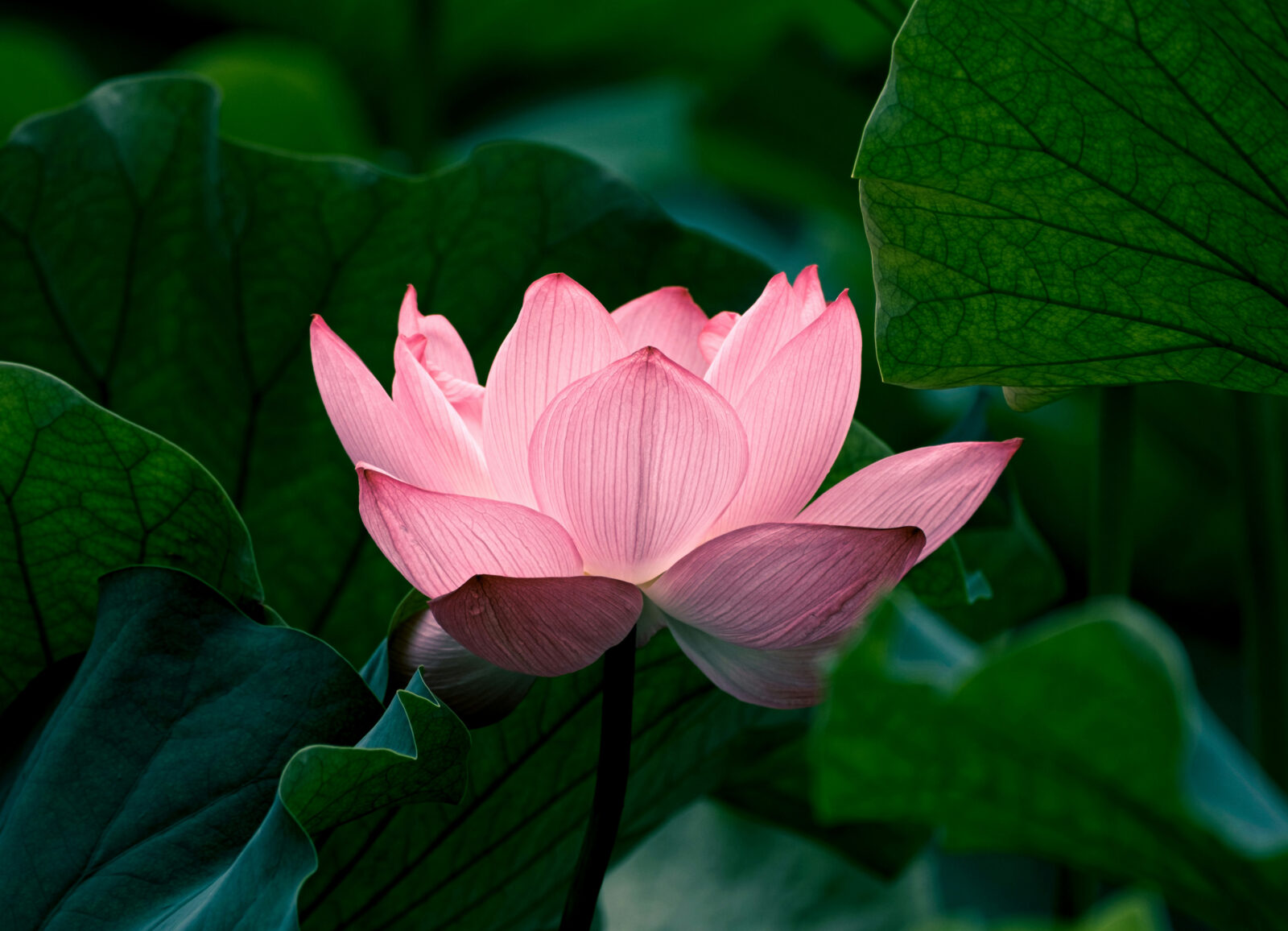
The lotus flower is one of the most extraordinary plants in the natural world because it exists at the intersection of biology, spirituality, and philosophy, and unlike most flowers that grow in clean soil or stable environments, the lotus grows in muddy, swampy, and nutrient-rich water yet still produces one of the cleanest, most beautiful, and most symmetrical flowers on earth, which makes it a powerful symbol of purity emerging from impurity, resilience rising from difficulty, and beauty existing even in harsh environments, and this unique combination of scientific adaptation and symbolic meaning has made the lotus one of the most respected flowers across ancient civilizations, religious traditions, and modern scientific studies.
🌿 Botanical Structure and Biological Engineering of Lotus
The lotus belongs to the genus Nelumbo, and it is a perennial aquatic plant that grows in shallow ponds, lakes, and marshes, where it develops a specialized structure consisting of a thick rhizome system buried in mud, long hollow stems that transport oxygen efficiently, and large circular leaves that float above the water surface, and what makes lotus biology extremely unique is its ability to maintain internal cleanliness despite external contamination, because its leaves are covered with microscopic waxy structures that repel water and dirt, a phenomenon known as the “lotus effect,” where water droplets roll off the surface carrying dust particles with them, effectively cleaning the plant naturally without any external force, which shows how advanced natural engineering can be even in simple-looking plants.
🌸 The Lotus Effect: Self-Cleaning Mechanism in Nature
One of the most scientifically fascinating properties of the lotus is its self-cleaning ability, which is caused by nanoscopic bumps on the surface of its leaves that reduce the contact area between water and the leaf surface, allowing water droplets to form near-perfect spheres that easily roll off, and as they move, they collect dirt, bacteria, and dust particles, leaving the leaf completely clean, and this natural mechanism has inspired modern biomimicry in science and technology, where engineers design self-cleaning materials, water-repellent coatings, and advanced surfaces based on the lotus model, showing that this plant is not only biologically advanced but also technologically influential in human innovation.
🌱 Life Cycle and Growth Process of Lotus Plant
The life cycle of the lotus begins with a seed that has an extremely hard outer shell, capable of surviving in harsh environmental conditions for many years until favorable conditions arise, and once the seed is exposed to warm water and oxygen, it begins germination by developing a root that anchors into the muddy substrate, followed by the emergence of stems that push upward toward the water surface, and as the plant matures, it develops floating leaves that allow maximum sunlight absorption, and finally, flower buds rise above the water surface to bloom, completing a cycle that demonstrates not only survival in difficult environments but also upward growth and transformation from darkness into light, which is why the lotus is often used as a metaphor for personal and spiritual development.
🌞 Why Lotus Stays Clean in Muddy Water (Scientific Explanation)
The lotus remains clean even in muddy water because of its hydrophobic surface structure, where microscopic wax crystals create a rough texture at the nano level that prevents water from spreading evenly across the leaf, and instead forces water to form droplets that roll off easily, and this process is not just a passive effect but a highly optimized evolutionary adaptation that protects the plant from fungal infections, bacterial growth, and dust accumulation, ensuring that its photosynthetic surfaces remain efficient, which is essential for energy production in aquatic environments where debris and microorganisms are abundant, making lotus one of the best examples of natural self-protection systems in plants.
🌺 Spiritual and Religious Importance of Lotus
The lotus holds deep spiritual significance in many cultures, particularly in Hinduism, Buddhism, and ancient Egyptian traditions, where it is considered a sacred symbol representing purity, enlightenment, rebirth, and divine creation, and in Hindu philosophy, the lotus is often associated with deities such as Lakshmi and Brahma, who are depicted seated on lotus flowers as symbols of spiritual purity and cosmic creation, while in Buddhism, the lotus represents the journey of the soul from ignorance to enlightenment, where the plant’s ability to rise above muddy water symbolizes human spiritual awakening, and in ancient Egypt, the lotus was associated with creation myths and the cycle of life and rebirth, showing that across civilizations, the lotus has consistently represented higher consciousness and transformation.
🌍 Cultural Symbolism and Human Interpretation
Beyond religion, the lotus has become a universal cultural symbol of resilience, beauty, and inner strength, and it is widely used in art, architecture, literature, and modern branding to represent purity and transformation, and in many Asian cultures, lotus flowers are used in ceremonies, meditation spaces, and traditional decorations to create a sense of peace and spiritual harmony, while in modern psychology and personal development symbolism, the lotus is often used as a metaphor for overcoming challenges and rising above difficult life situations, showing how deeply this flower is embedded in human emotional and philosophical thinking.
🧪 Medicinal and Practical Uses of Lotus
The lotus is not only symbolic but also highly practical, as different parts of the plant including seeds, roots, leaves, and flowers are used in traditional medicine systems such as Ayurveda and Traditional Chinese Medicine, where lotus seeds are known for improving digestion and mental clarity, lotus roots are rich in nutrients and used in culinary dishes, and lotus flowers are used in herbal teas believed to reduce stress and improve heart health, while extracts from the plant are also studied for their antioxidant and anti-inflammatory properties, making lotus a multifunctional plant that contributes to both physical health and emotional well-being.
🐝 Ecological Role of Lotus in Aquatic Ecosystems
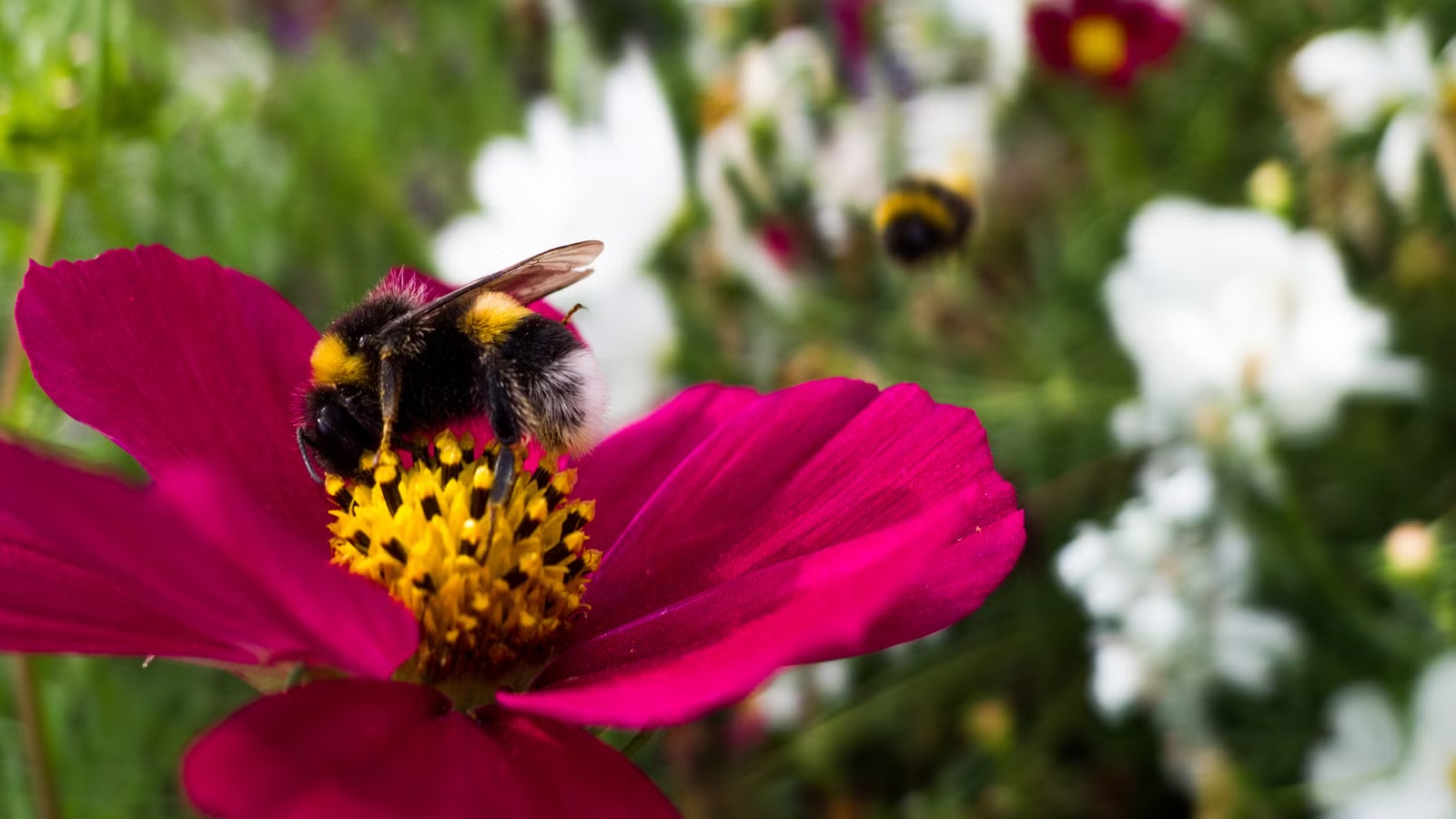
The lotus plays an important ecological role in aquatic environments by providing shelter and oxygenation in freshwater ecosystems, where its large leaves offer shade and protection for fish and small aquatic organisms, while its root system helps stabilize sediment and reduce water pollution by absorbing excess nutrients, and its flowers attract pollinators such as insects, contributing to biodiversity and maintaining balance in wetland ecosystems, showing that the lotus is not just a symbolic plant but also an essential ecological component in maintaining healthy water-based environments.
🌸 Conclusion
The lotus is one of the most powerful examples of how nature combines science, beauty, and symbolism into a single living system, because it is biologically adapted to survive in muddy water while maintaining perfect cleanliness, ecologically important in aquatic environments, and spiritually significant across multiple civilizations, and its ability to represent transformation, purity, and resilience makes it one of the most meaningful flowers in both natural science and human philosophy, bridging the gap between physical biology and inner human experience in a way that very few plants can achieve.
❓ FAQ
1. Why is the lotus considered a sacred flower?
Because it symbolizes purity, enlightenment, and spiritual awakening in many religions.
2. How does lotus stay clean in mud?
Due to its hydrophobic leaf surface called the “lotus effect.”
3. Can lotus grow in any water?
It grows best in shallow, still freshwater environments like ponds.
4. Is lotus edible?
Yes, roots, seeds, and stems are used in many cuisines.
5. What does lotus symbolize in life?
It symbolizes rising above difficulties and achieving inner growth.

Leave a Reply