
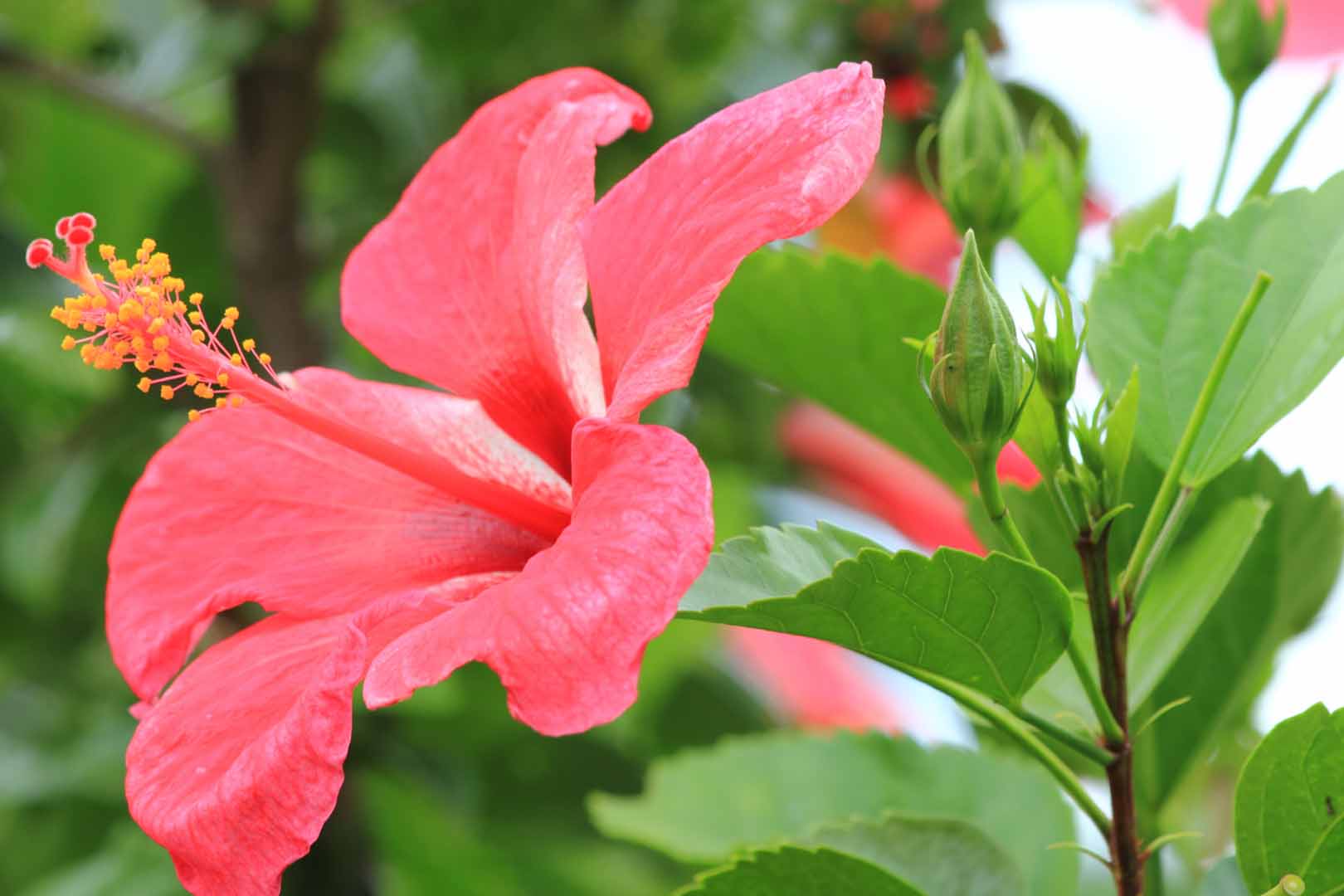
The hibiscus flower is one of the most visually striking and scientifically valuable tropical plants in the world, known for its large, colorful petals and strong medicinal applications, and unlike many ornamental flowers that are mainly grown for decoration, hibiscus plays a dual role in both aesthetics and health, as it is widely used in traditional medicine, herbal teas, skincare products, and hair treatments, making it a plant that directly connects beauty with biology and wellness, especially in tropical and subtropical regions where it grows abundantly and becomes part of daily cultural life.
🌿 Botanical Structure and Natural Design of Hibiscus
Hibiscus belongs to the genus Hibiscus in the mallow family, and it includes hundreds of species ranging from shrubs to small trees, and what makes its structure scientifically interesting is its large, trumpet-shaped flowers with five or more broad petals, a long central reproductive column called the “staminal column,” and deeply lobed green leaves that allow efficient photosynthesis in warm climates, and this structure is designed in a way that maximizes visibility for pollinators such as bees, butterflies, and hummingbirds, making hibiscus a highly efficient reproductive plant adapted for tropical ecosystems.
🌸 Why Hibiscus Flowers Look So Large and Attractive
The large size and bold appearance of hibiscus flowers are not just for beauty but are evolutionary adaptations designed to increase pollination success, because in dense tropical environments plants must compete for attention from pollinators, and hibiscus achieves this by producing oversized, vibrant flowers in colors like red, pink, yellow, orange, and white, where each color variation is controlled by pigment compounds such as anthocyanins and flavonoids, and the broad petal surface increases visibility from long distances, ensuring that pollinators can easily locate the flower even in thick vegetation.
🌱 Life Cycle and Growth Pattern of Hibiscus Plant
The life cycle of hibiscus begins with seed germination or stem cutting propagation, and once planted in warm, moist soil, the plant quickly develops a strong root system followed by rapid stem and leaf growth, and as it matures, it begins producing flower buds that bloom into large flowers that typically last for a single day but are continuously replaced by new blooms, making hibiscus a plant with constant flowering cycles in favorable conditions, and this continuous blooming behavior is one of the reasons it is widely used in gardens and landscaping.
🧠 Psychological and Emotional Impact of Hibiscus
Hibiscus flowers have a strong emotional and psychological impact due to their bold and tropical appearance, and in color psychology, red hibiscus is associated with passion and energy, pink with softness and femininity, yellow with positivity and warmth, and white with peace and purity, and these emotional associations make hibiscus widely used in decorative environments, wellness spaces, and cultural ceremonies, where its presence creates a sense of tropical calmness and natural beauty.
🌍 Cultural and Symbolic Importance of Hibiscus
Hibiscus holds deep cultural meaning across different regions of the world, especially in Asia, Africa, and the Pacific Islands, where it is used in religious rituals, festivals, and traditional ceremonies, and in countries like India it is associated with goddess worship, while in Hawaii it symbolizes hospitality and beauty, and in China it is linked to fame and personal success, and in many cultures hibiscus flowers are also used as offerings and decorations during spiritual events, showing that this flower is not only decorative but also deeply symbolic in human cultural expression.
🧪 Medicinal and Health Benefits of Hibiscus
Hibiscus is widely used in herbal medicine because of its rich antioxidant, anti-inflammatory, and vitamin content, and hibiscus tea is especially popular for its potential benefits in lowering blood pressure, improving heart health, supporting digestion, and boosting immune function, while hibiscus extracts are also used in skincare and haircare products due to their ability to strengthen hair roots, reduce dandruff, and improve skin hydration, making it one of the most versatile medicinal flowers in traditional and modern wellness systems.
🐝 Ecological Role of Hibiscus in Nature
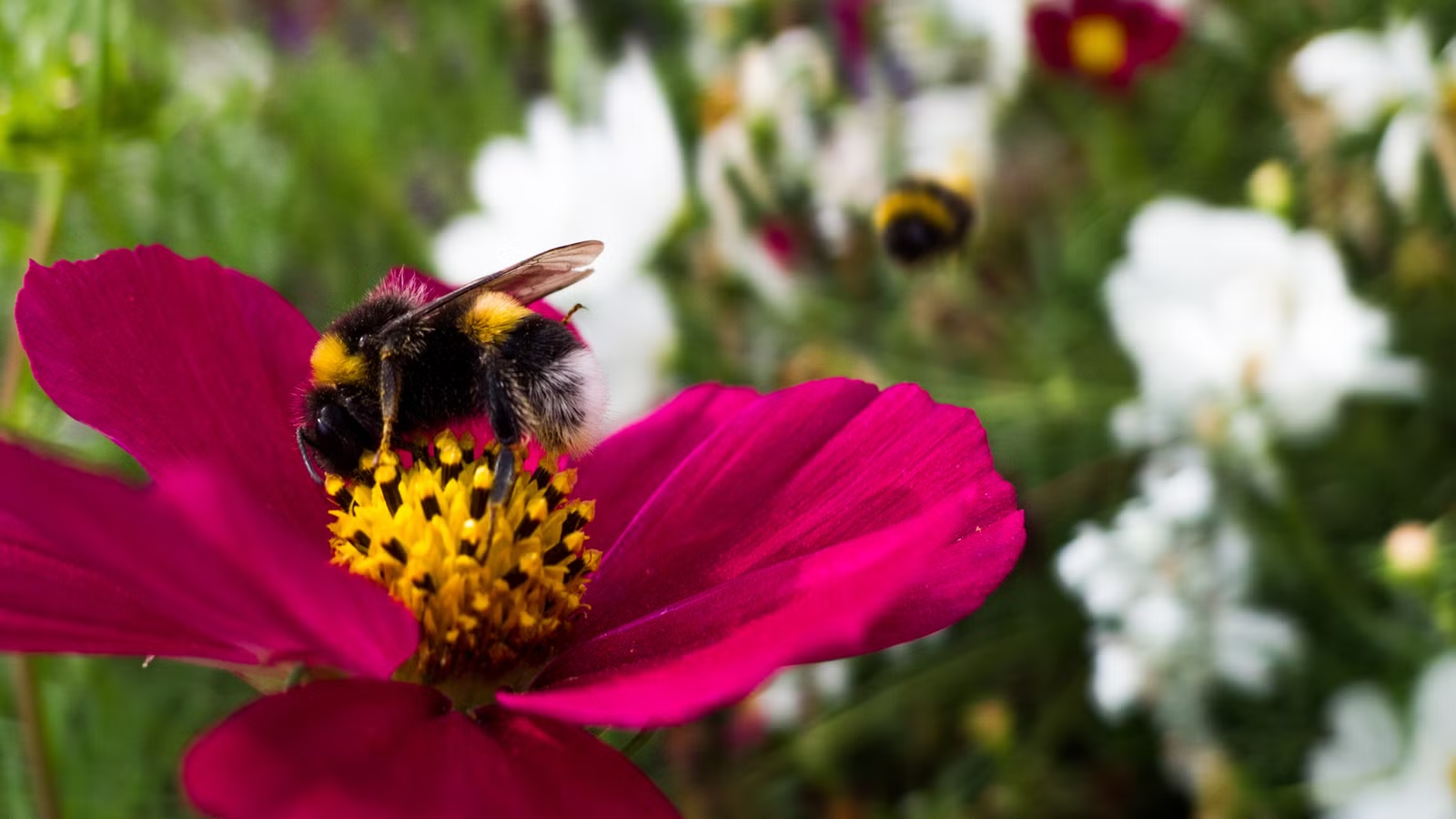
Hibiscus plays an important ecological role by attracting pollinators such as bees, butterflies, and hummingbirds, which help maintain biodiversity and plant reproduction in tropical ecosystems, and its large flowers provide nectar sources for insects and birds, while its dense foliage also offers shelter for small organisms, making hibiscus an important part of natural ecological balance in warm climates.
🌸 Conclusion
The hibiscus flower is a powerful example of how nature combines beauty, biology, and functionality into a single plant, because it is not only visually stunning but also ecologically important, culturally meaningful, and scientifically valuable, and its use in medicine, skincare, and traditional rituals shows how deeply integrated it is into human life, making hibiscus one of the most complete and versatile flowering plants in the natural world.
❓ FAQ
1. Why is hibiscus flower so popular?
Because of its large, colorful appearance and multiple health benefits.
2. Is hibiscus good for health?
Yes, hibiscus tea supports heart health and digestion.
3. Why does hibiscus bloom daily?
Because each flower lasts one day but new buds continuously replace them.
4. Can hibiscus grow in pots?
Yes, it grows well in containers with proper sunlight and water.
5. What does hibiscus symbolize?
It symbolizes beauty, passion, and tropical elegance.

Leave a Reply