
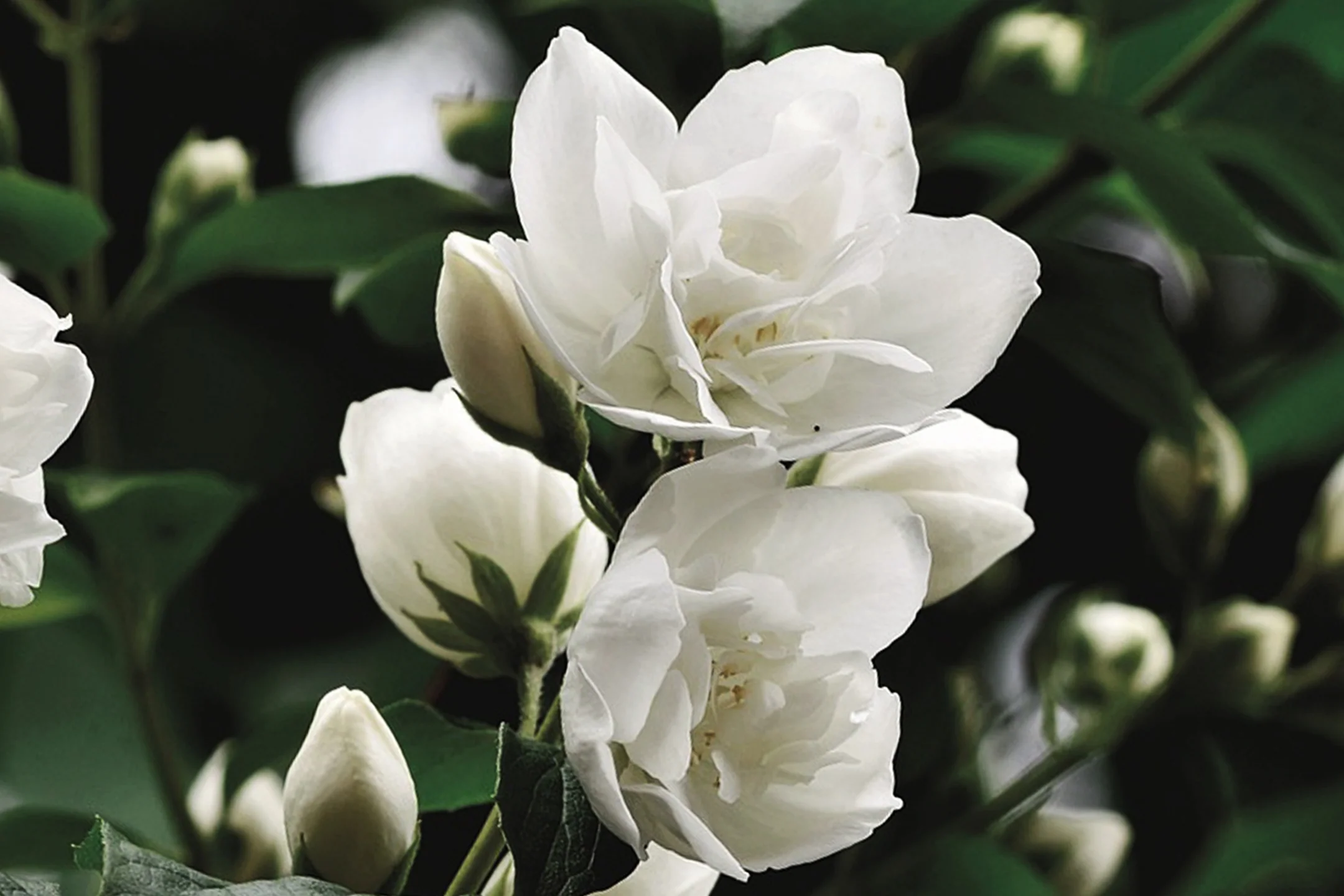
Jasmine, commonly known as Mogra in South Asia, is one of the most emotionally powerful and spiritually significant flowers in the world, widely admired not only for its small white petals but for its extremely strong, sweet fragrance that can fill an entire garden even from a single plant, making it one of the most valued ornamental and aromatic flowers in human history, and what makes jasmine even more interesting is that despite its delicate appearance, it is a highly adaptive plant that can survive in different climates, from tropical regions to mild temperate environments, showing how nature designs even the most fragile-looking flowers with powerful survival mechanisms that allow them to thrive across continents and cultures.
🌿 Botanical Structure and Biological Design of Jasmine Plant
The jasmine plant belongs to the genus Jasminum, which includes more than 200 species of shrubs and vines, and what makes its biological structure special is that it is typically a fast-growing woody climber or bush that produces thin green stems, small oval-shaped leaves, and highly fragrant white flowers that bloom in clusters, and scientifically speaking, jasmine flowers are designed with a simple but highly efficient reproductive structure that allows them to attract night and early-morning pollinators such as moths and bees, while the plant’s vascular system continuously transports water, minerals, and nutrients from the soil to the flowers, ensuring that even small buds can develop into fully fragrant blooms under the right environmental conditions, making jasmine a perfect example of how minimal structural complexity in appearance can still support highly advanced biological function in nature.
🌸 Why Jasmine Has Such a Strong Fragrance (Scientific Explanation)
The intense fragrance of jasmine flowers is not random or decorative but is actually the result of complex chemical compounds known as volatile organic compounds (VOCs), which include substances like benzyl acetate, linalool, and indole, and these chemicals are released into the air especially during evening and nighttime hours when pollinators are most active, creating a strong sensory signal that attracts insects from long distances, and interestingly, jasmine fragrance is more powerful at night because temperature drops and humidity changes increase the release of these aromatic molecules, making the scent travel further, which shows that jasmine has evolved a highly intelligent biological timing system that synchronizes fragrance production with ecological conditions to maximize pollination success, and this is one of the main reasons why jasmine is widely used in perfumes, aromatherapy, and spiritual rituals across different cultures.
🌱 Growth Cycle and Life Development of Jasmine Plant
The growth cycle of jasmine begins from either seed germination or vegetative propagation through stem cuttings, where the plant first focuses on developing strong roots that anchor it into the soil and absorb nutrients, followed by the formation of thin climbing stems that allow it to spread and reach sunlight efficiently, and as the plant matures, it begins producing small green buds that gradually transform into white star-shaped flowers under optimal conditions of warmth, moisture, and sunlight exposure, and what makes jasmine unique is that it can bloom multiple times in a year depending on the species and environment, meaning it does not strictly follow a single seasonal cycle like many other flowers, which gives it a continuous presence in gardens and landscapes and increases its value as both an ornamental and commercially important flowering plant.
🌺 Cultural, Spiritual, and Emotional Importance of Jasmine
Jasmine has deep cultural and emotional significance across Asia, the Middle East, and even parts of Europe, where it is often associated with purity, love, spirituality, and divine connection, and in countries like India, Pakistan, and Bangladesh, jasmine flowers are commonly used in religious ceremonies, weddings, and hair decoration, symbolizing beauty, grace, and positive energy, while in Middle Eastern cultures jasmine is often linked with hospitality and peace, and in literature and poetry, jasmine is frequently used as a metaphor for innocence and emotional softness, which shows that beyond its biological identity, jasmine has become a universal emotional language that humans use to express feelings that are otherwise difficult to put into words, making it one of the most emotionally embedded flowers in human civilization.
🌿 Medicinal and Practical Uses of Jasmine
Jasmine is not only a decorative or symbolic flower but also has important medicinal and practical applications, as its extracts are used in traditional herbal medicine for stress relief, mood enhancement, and relaxation, and jasmine tea, which is made by infusing green tea leaves with jasmine blossoms, is widely consumed for its calming and antioxidant properties, while jasmine essential oil is used in aromatherapy to reduce anxiety and improve sleep quality, and in skincare products, jasmine extracts are valued for their soothing and anti-inflammatory properties, which makes this flower not just a visual or aromatic experience but also a functional plant that contributes directly to human physical and mental well-being in multiple ways.
🌍 Ecological Role of Jasmine in Nature
Jasmine plays an important role in supporting ecological balance by attracting pollinators such as bees, butterflies, and moths, which are essential for maintaining biodiversity and ensuring the reproduction of many other plant species in the environment, and because jasmine flowers bloom in clusters and often at night, they provide a reliable food source for nocturnal pollinators, making them an important part of nighttime ecological systems, and additionally, jasmine plants contribute to improving air quality and adding humidity to their surroundings, which helps create healthier microclimates in gardens and urban environments, showing that even a small flowering plant can have a meaningful impact on the ecosystem when it exists in sufficient numbers.
🌼 Conclusion
Jasmine is far more than just a small white fragrant flower because it represents a complete system of biological intelligence, cultural meaning, and ecological importance, where every aspect of its existence—from chemical fragrance production to its symbolic role in human societies—demonstrates how deeply connected nature and human life truly are, and when we observe jasmine closely, we realize that its beauty is not only in its appearance but in the complex scientific and emotional systems it represents, making it one of the most significant and universally loved flowers in the world.

Leave a Reply