
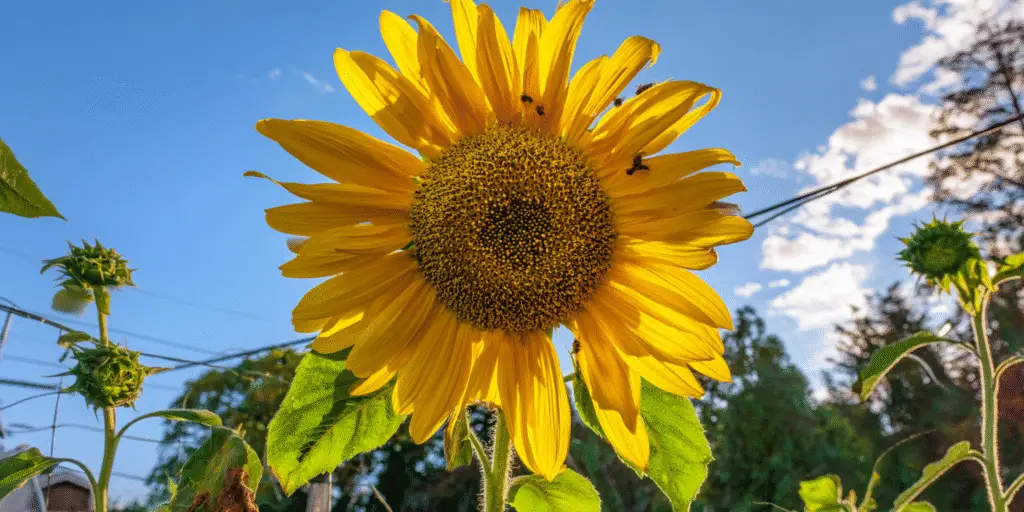
The sunflower is one of the most fascinating flowering plants in the natural world because it is not only visually striking due to its large yellow head and radiant petal arrangement, but also biologically unique because it demonstrates one of the most well-known plant behaviors called heliotropism, where the plant physically tracks the movement of the sun across the sky during its growth phase, making it a living example of how plants are far more dynamic and responsive to their environment than most people assume, and beyond its beauty, the sunflower is also a highly important agricultural, ecological, and psychological symbol that represents energy, positivity, and life direction across many human cultures.
🌿 Botanical Structure and Biological Engineering of Sunflower
The sunflower belongs to the genus Helianthus and is scientifically classified as a composite flower, meaning that what looks like a single flower is actually a cluster of hundreds or even thousands of tiny individual flowers called florets arranged in a spiral pattern inside the central disk, and this structure is not only visually symmetrical but also mathematically precise, following natural growth patterns such as Fibonacci spirals that allow maximum packing efficiency for seed formation, while the large yellow outer petals, known as ray florets, function primarily to attract pollinators like bees and butterflies, creating a highly efficient reproductive system where the plant combines attraction and reproduction into one integrated biological design.
🌞 Heliotropism: Why Sunflowers Follow the Sun
One of the most scientifically interesting behaviors of sunflowers is heliotropism, which is the ability of young sunflower plants to track the sun’s movement from east to west during the day, and this movement is controlled by differential growth on opposite sides of the stem, regulated by plant hormones called auxins, where cells on the shaded side of the stem elongate slightly more than those on the sunlit side, causing the plant to bend gradually toward the light source, and this movement is not conscious or mechanical like animal movement but is instead a slow biological response that maximizes light absorption for photosynthesis, and once the sunflower matures, this movement typically stabilizes, with most mature flowers permanently facing east, which helps them warm up faster in the morning and attract more pollinators early in the day.
🌱 Life Cycle and Growth Development of Sunflower
The sunflower life cycle begins with a seed that contains a high amount of stored nutrients, especially oil and proteins, which support early germination, and when planted in warm, well-drained soil, the seed absorbs water and activates enzymatic processes that trigger root emergence followed by upward shoot growth, after which the plant rapidly develops a thick, sturdy stem designed to support its large flowering head, and during its vegetative phase, the sunflower grows broad leaves that maximize sunlight absorption, and once the plant reaches maturity, hormonal signals trigger the formation of the flower head, which gradually develops into a large composite structure filled with florets that eventually transform into seeds, completing the reproductive cycle and ensuring continuation of the species.
🌻 Psychological Impact and Human Emotional Connection
Sunflowers have a powerful psychological effect on humans because their bright yellow color is strongly associated with sunlight, warmth, and positive emotional states, and studies in color psychology suggest that yellow tones can stimulate mental energy, improve mood, and increase feelings of optimism, which is why sunflowers are often used in therapeutic environments, gardens, and decorative spaces to create a sense of happiness and emotional upliftment, and beyond psychology, sunflowers have also become cultural symbols of hope and resilience, especially in art and literature, where they are used to represent the idea of turning toward light even in difficult conditions, making them not just biological organisms but emotional metaphors for human life experience.
🌍 Cultural and Symbolic Importance of Sunflowers
Across different cultures, sunflowers hold deeply symbolic meanings that often revolve around positivity, loyalty, and spiritual alignment, and in many traditions, they are seen as symbols of faith and constancy because of their natural tendency to follow the sun, while in modern contexts, sunflowers are often associated with environmental awareness, peace movements, and emotional healing, and in art history, famous artists like Vincent van Gogh used sunflowers as central themes in their work to express emotional intensity and the beauty of simplicity, showing how this flower has transcended its biological identity to become a global cultural icon.
🐝 Ecological Role and Importance in Nature
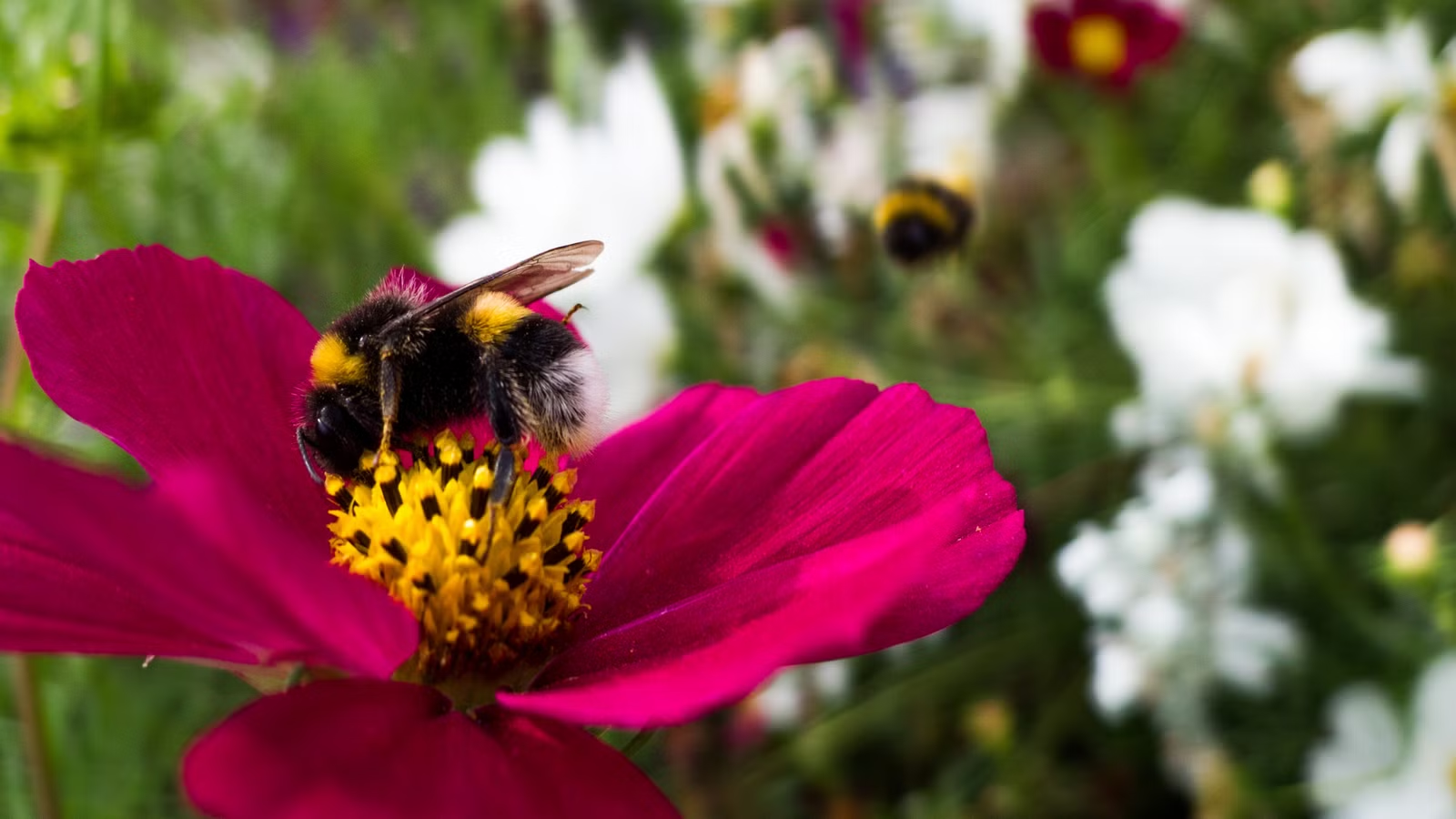
Sunflowers play a significant ecological role because they provide nectar and pollen for a wide range of pollinators including bees, butterflies, and other insects, which are essential for maintaining biodiversity and supporting agricultural systems, and additionally, sunflower seeds serve as a food source for birds and small animals, making the plant an important part of the food chain, while the sunflower’s ability to grow in different soil conditions also helps in soil improvement and phytoremediation, where the plant can absorb certain toxins from the soil, contributing to environmental cleanup and ecosystem balance.
🧪 Industrial, Agricultural, and Commercial Uses
Sunflowers are not only ornamental plants but also highly valuable in agriculture and industry because their seeds are rich in oil, which is widely used for cooking, cosmetics, and industrial applications, and sunflower oil is considered one of the healthiest vegetable oils due to its high content of unsaturated fats and vitamin E, while sunflower seeds are consumed as snacks and used in animal feed, and beyond food production, sunflowers are also used in biofuel research and sustainable farming systems, making them one of the most economically important flowering plants in the world.
🌻 Conclusion
The sunflower is a remarkable example of how nature combines beauty, function, and intelligence into a single living organism, because it is not only visually striking but also biologically advanced, behaviorally responsive, ecologically important, and emotionally influential, and its ability to track sunlight, produce valuable seeds, support ecosystems, and inspire human psychology makes it one of the most complete and meaningful flowers in both science and culture, representing the connection between life, energy, and direction in the natural world.
❓ FAQ
1. Why do sunflowers follow the sun?
Because of a biological process called heliotropism controlled by plant hormones.
2. Are sunflowers only decorative?
No, they are also used for oil production, food, and ecological benefits.
3. Why are sunflowers yellow?
Because of pigments called carotenoids that reflect yellow light.
4. Do sunflowers always face the sun?
Only young plants move; mature sunflowers usually face east.
5. What is the main importance of sunflowers?
They support ecosystems, produce oil, and have strong psychological symbolism.

Leave a Reply